
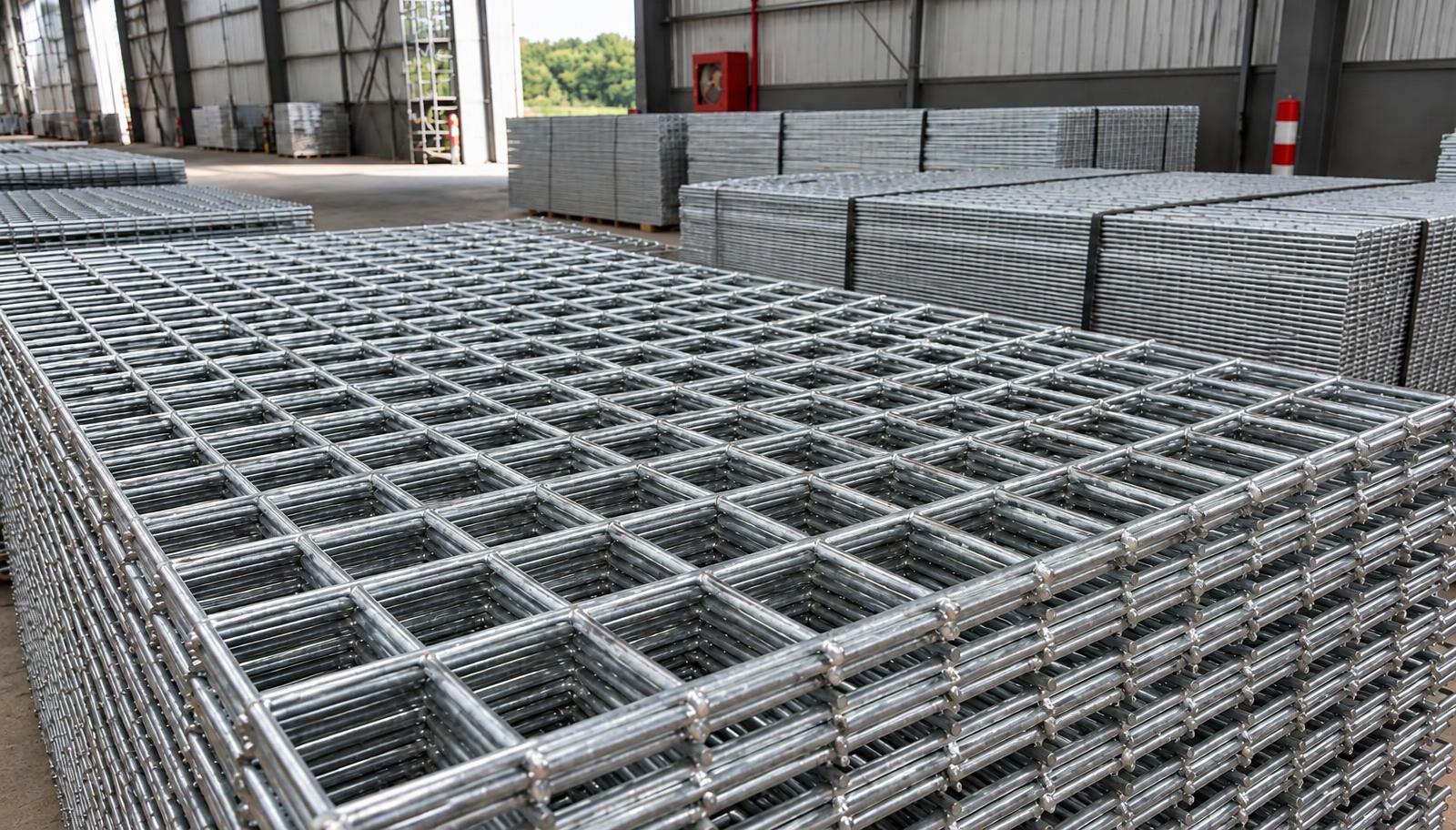
A mesh panel can look right in a photograph and still be wrong for a site. The opening may not match the requirement. The wire may be a different diameter. The finish may not be the one the project specified. Those are not small details once material is on the ground and a crew is waiting.
At Rainbow Steels, we manufacture welded wire mesh in panels and rolls, from our standard catalogue and to custom dimensions. A good enquiry gives us enough information to identify the correct product, check the manufacturing requirement and plan despatch around the job.
Start with the job, not just the product name
Tell us where the mesh will be used: ground support, fencing, a fabricated enclosure or another project application. Share the approved drawing or project specification when one is available. Mesh selection for structural or ground-support use belongs to the project's qualified engineer; a product catalogue is not a substitute for that design.
The purpose helps settle practical questions about format, handling and finish. It also lets our team flag an incomplete requirement before it becomes a quotation based on assumptions.
Define wire diameter and aperture separately
Wire diameter describes the thickness of the wire. Aperture describes the opening between wires. Both affect what arrives on site, and both should appear in the enquiry with clear units and the agreed measurement convention.
Our welded wire mesh catalogue lists wire diameters from 1.1 mm to 12 mm and apertures from 15 × 15 mm to 200 × 200 mm. Not every combination should be assumed to be available for every application. Confirm the exact combination, drawing and quantity with our team before ordering.
If a drawing uses pitch rather than clear aperture, say so. A short clarification at this stage is better than a dimensional disagreement after delivery.
Choose panels or rolls for the site workflow
Specify the overall width and length, not only the mesh opening. Then identify whether you need panels or rolls. Add any cut-size requirement and the preferred quantity unit so that the quotation and purchase order describe the same material.
Think about the site's unloading space, storage and installation sequence. The best format is the one that fits the approved design and can be handled properly by the crew, rather than simply the one that looks economical on paper.
Put the finish in writing
Do not leave coating or finish to interpretation. State the required finish from the product range and any project-specific coating requirement. Exposure, service conditions and the project specification should guide that decision; no finish is a universal answer for every site.
Rainbow Steels checks dimensions and coating before releasing a lot. Clear requirements make those checks meaningful: the team can verify against the agreed order rather than an informal description.
Include quantity, marking and delivery information
A complete mesh enquiry should include:
- Application and approved drawing reference.
- Wire diameter, aperture or pitch, and measurement units.
- Panel or roll width and length.
- Required finish and any project inspection requirement.
- Quantity and agreed quantity unit.
- Delivery location, required window and staged-delivery sequence.
- Bundle identification or marking requirements.
Standard range or custom work: the same accountability
Rainbow Steels has manufactured steel products since 1997. Whether the order uses an established catalogue size or a custom dimension, the same approach applies: define the requirement, manufacture to it, check the lot and coordinate despatch.
If your mesh requirement is still being settled, send the drawing and the details you already have. We will help clarify the supply specification before the order moves ahead.
Speak to our team in West Bengal
Rainbow Steels has its corporate office in Kolkata and manufacturing unit in Hooghly, West Bengal. Share your mesh drawing, quantities and delivery location with sales@rainbowsteels.com so our team can review the supply requirement.